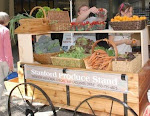
Join us this Friday from 11 am to 3 pm for the Stanford Produce Stand! Come get your weekly supply of delicious, fresh, organic, and locally grown items. We are located in the front courtyard of Tresidder Memorial Union.
From the Stanford Community Farm and gardens: Cabbage, lettuce, parsley, beets, turnips, collards, and Red Russian and Dino kale, & peas
From ALBA Organics: Cauliflower, de ciccio broccoli, fuji apples, chioggia beets, & mandarins.
See you at the Produce Stand!
Thursday, February 25, 2010


Thursday, February 18, 2010
Produce Stand THIS FRIDAY 11 am - 3 pm!
Join us this Friday from 11 am to 3 pm for the Stanford Produce Stand! Come get your weekly supply of delicious, fresh, organic, and locally grown items. We are located in the front courtyard of Tresidder Memorial Union.
From the Stanford Community Farm and gardens: Cabbage, lettuce, parsley, beets, turnips, collards, and Red Russian and Dino kale, & peas
From ALBA Organics: Cauliflower, de ciccio broccoli, fuji apples, chioggia beets, & minneola tangerines
Spotlight on: Cabbage!

As a child (and, admittedly, to this day), my favorite author was Roald Dahl. I have read Charlie and the Chocolate Factory more times than I can count. For those familiar with this book, you may remember the young protagonist, Charlie Bucket. Charlie lived in a small, poorly heated house with his parents and four grandparents. The Buckets were very, very poor and struggled to feed 7 mouths each day. According to the book:
"There wasn't even enough money to buy proper food for them all. The only meals they could afford were bread and margarine for breakfast, boiled potatoes and cabbage for lunch, and cabbage soup for supper."
As you can imagine, for many years I associated cabbage with a despondent, hungry Charlie Bucket. "Poor Charlie!" I would think to myself. "All he and his family have to eat is cabbage! How awful!" I'm not even sure I knew what cabbage was the first (twenty) time(s) I read the book. But it didn't matter, for Dahl's words succeeded magnificently in articulating all I needed to know: cabbage = not good. Cabbage, to me, was the complete antithesis of Willy Wonka's wondrous chocolate factory: bland and unappetizing.
How wrong I was! It's really too bad the Buckets did not have the cabbage recipe I am about to share with you. It comes from Molly Stevens' cookbook on braising*, All About Braising, The Art of Uncomplicated Cooking. In it, Stevens goes so far as to dub this dish the "World's Best Braised Green Cabbage." This assertion sparked such skepticism in me (how good could braised cabbage possibly be?) that I had to try the recipe out for myself. As a result, I learned that cabbage can, in fact, be flavorful and delicious enough to deserve the title of "World's Best Braised Green Cabbage." And you can, too! Here's how:
1. Preheat oven to 325 degrees Fahrenheit.
2. Oil a 9 x 13 baking dish.
3. Cut one head of cabbage into 8 wedges and lay in the baking dish.
4. Scatter a thickly sliced yellow onion and 1 large carrot (cut into 1/4 inch rounds) over the top.
5. Drizzle 1/4 cup olive oil and 1/4 cup chicken stock over the top.
6. Season with salt, pepper, and red pepper flakes.
7. Cover tightly with foil.
8. Bake 1 hour.
9. After 1 hour, remove the foil and flip the cabbage over. Re-cover, and bake for one additional hour.
10. When the cabbage is tender, remove the foil, increase the heat to 400 degrees Fahrenheit, and brown the vegetables for about another 15 minutes.
11. Sprinkle with sea salt and serve.
*Braising, for those unfamiliar with this cooking technique, is "a form of moist-heat cooking in which the item to be cooked is partially covered with liquid and then simmered slowly at a low temperature" (thanks, about.com!). I have always associated braising with meat (think: pot roast), but as I learned through this recipe, it's a method that serves veggies just as well.
Luckily for you, we have some beautiful cabbage available, harvested right from the Stanford Community Farm. Stop by the stand tomorrow and start braising!
See you at the Produce Stand!
(Picture source: http://bexar-tx.tamu.edu/HomeHort/F1Column/2007%20Articles/Plant%20of%20the%20Week/SEP1%20%27Cheers%27%20Cabbage.htm)
Thursday, February 11, 2010
Produce Stand this FRIDAY 11 am - 3 pm!
Join us this Friday from 11 am to 3 pm for the Stanford Produce Stand! Come get your weekly supply of delicious, fresh, organic, and locally grown items. We are located in the front courtyard of Tresidder Memorial Union.
From the Stanford Community Farm: Cabbage, lettuce, parsley, beets, turnips, collards, and Red Russian and Dino kale
From ALBA Organics: Beets, baby carrots, Minneola tangerines, Fuji apples, and de ciccio broccoli
Spotlight on: Kale!

Looking for an unconventional way to prepare the bountiful bunch of dino kale you picked up from the Produce Stand? Try roasting it to make kale chips! This method of preparing kale provides an excellent (and equally addicting) alternative to potato chips. Plus, it couldn't be simpler, requiring only three ingredients: kale, olive oil, and sea salt.
1.) Tear the kale leaves (not the stems) into chip-sized pieces (as big or small as you'd like).
2.) Drizzle about 1 tablespoon of olive oil per bunch over leaves, and season with sea salt and pepper to taste. Gently mix together.
3.) Lay the kale pieces in a single layer on a baking sheet (and if you're me, now would be an excellent time to sprinkle some Parmesan or Asiago cheese on top).
4.) Roast at 375 degrees for about 10-15 minutes, until edges are brown but not burnt.
5.) Enjoy!
Food for thought:
-Dino kale does, in fact, derive its name from its reptilian texture.
-One cup of kale packs in more than the daily requirement of vitamins K and A. Plus, it's an excellent source of calcium, fiber, and vitamin C.
See you at the Stand!
(picture source: http://www.seedsofchange.com)
Thursday, February 4, 2010
Produce Stand THIS FRIDAY 11 am - 3 pm
Join us this Friday from 11 am to 3 pm for the Stanford Produce Stand! Come get your weekly supply of delicious, fresh, organic, and locally grown items. We are located at Tresidder Union, in front of Jamba Juice.
From the Stanford Community Farm: Cabbage, lettuce, parsley, beets, turnips, collards, and Red Russian and Dino kale
From ALBA Organics: Fuji apples, blood oranges, French fingerlings, and broccoli
Spotlight on: Turnips!


If you've stopped by the stand these past 2 weeks, you may have tried one of our free turnip samples. Turnips are great eaten raw - crisp and refreshing. As delicious as this effortless snack is, however, sometimes people desire a little bit more from this underappreciated taproot. In these instances, I can think of no better way to jazz up a turnip (or any vegetable, really) than by dousing it in copious amounts of cream and cheese. Pick up some turnips (grown right here at the Stanford Community Farm!) and some fingerling potatoes to make this indulgent and satisfyingly delicious Turnip and Potato Gratin. If you're a turnip fan, this recipe won't disappoint; if you're not, this recipe just might change your mind.
Ingredients
1 garlic clove, peeled
6 turnips, peeled
2 large potatoes, peeled
2 teaspoons salt
1 1/2 cups heavy cream
3 ounces gruyere cheese
1. Heat the oven to 45o degrees. Rub the garlic clove all over he inside of a heavy gratin dish, ten butter the dish well and set aside. Discard the garlic.
2. Slice the turnips and potatoes as thinly as you can (a mandoline would come in handy here). Toss the vegetables with the salt and place them in rough layers in the gratin dish. Bake until softened, 20 to 30 minutes. Stir with a spatula every 10 minutes, making sure the bottom layer doesn't scorch.
3. Pour the cream over the potatoes; it should come just to the top layer without covering it. Distribute the cheese over the top and bake until the cream thickens and the top is browned, about 30 minutes. Serve hot.
*recipe from www.seriouseats.com*
Fun Turnip Fact: The Halloween tradition of carving a pumpkin originated with carving turnips! In the UK, turnips were carved on Halloween and left on doorsteps to ward off evil spirits. When the practice made its way to the US in the 19th century, turnips were replaced with pumpkins, which were more readily available.
"If there were only turnips and potatoes in the world, someone would complain that plants grow the wrong way." -Georg Chrisoph Lichtenberg
Monday, January 11, 2010
Video on Stanford Farm & Produce Stand
Special thanks to Leslie Mercado and Christina Carroll for making this video! If the video does not seem to be loading try clicking on the title of this post.
Tuesday, November 17, 2009
How to prepare winter squash

There are several varieties of winter squash, all of which are grown in the summer but can be stored throughout the winter. At the produce stand we've been selling butternut squash, grown on Stanford campus, and delicatta squash, supplied by ALBA organics.
Butternut squash is shaped like a vase with a large bulbous end and beige colored skin. It has a deep-orange flesh with a sweet, nutty flavor and tastes somewhat similar to sweet potatoes. Delicatta squash looks like a large ranging in 5-10 in length and is typically yellow in color with green stripes along its rind. It has a creamier flesh than most winter squash and tastes like a mixture of sweet corn and sweet potatoes.
(cited from whatscookingamerica.net)
Here are a few ways to prepare your winter squash:
1. Easy (steamed or boiled): Wash, peel, and remove seeds. Then cut squash into 2-inch cubes or quarter, leaving rind on (it will remove easily after cooking). Bring 1 inch of water to a boil in a saucepan and place squash on a rack or basket in the pan. Do not immerse it in water. Cover the pan tightly and steam the squash 30 to 40 minutes or until tender. You could alternatively places these 2-inch cubes in boiling water and cook for 30 minutes or until tender.
2. Easy (baked): Wash squash and cut it lengthwise. Cut squash in half and remove seeds. Place squash in a baking dish. Bake at 400°F for 1 hour or until tender. Seeds can be toasted at 350 degrees F for 20 minutes.
3.. Moderate (boiled, pureed): Sherried Winter Squash Bisque
Ingredients:
- 2 tablespoons olive oil
- 1 medium onion, chopped
- 2-pound winter squash (preferably butternut or delicatta), peeled, cubed (about 6 cups)
- 1 14 1/2-ounce can diced tomatoes, drained
- 2 tablespoons dry Sherry
- 2 1/2 cups (or more) canned vegetable broth
- 2/3 cup nonfat half in half
- 2 tablespoons chopped fresh thyme or 2 teaspoons dried
Heat olive oil in heavy large saucepan over medium-high heat. Add chopped onion and sauté until translucent, about 5 minutes. Add butternut squash and sauté until beginning to brown, about 10 minutes. Add tomatoes and Sherry. Boil until almost all liquid evaporates, about 30 seconds. Stir in 2 1/2 cups vegetable broth. Bring to boil. Reduce heat, cover and simmer until squash it very tender, stirring occasionally, about 30 minutes.
Puree soup in blender in batches until smooth. Return soup to same saucepan. Stir in half in half and chopped thyme. Bring to simmer. Season soup to taste with salt and pepper. (Can be prepared 1 day ahead. Cover tightly and refrigerate. Bring soup to simmer before serving, thinning with more broth, if desired.)
(adopted from sherried winter squash bisque recipe as seen on epicurious.com)
Thursday, November 12, 2009
This Friday (11/13/09) We're Selling...
From Stanford Community Farm and Gardens: peppers, eggplants, red beets, chioggia beets, red russian kale, dino kale, swiss chard, collard greens, bok choy, winter squash, cabbage, arugula, butterhead lettuce, and cilantro.
From ALBA organics: gala apples, mandarins, kiwis, fingerling potatoes, and broccoli
*All ORGANIC and all LOCAL
Thank you for supporting the Stanford Community Farm and local farmers at ALBA organics by visiting our stand. And remember to check out our blog at http://stanford-producestand.blogspot.com/ for weekly availability, producetips, and recipe ideas.
See you there!
Nicole
Subscribe to:
Posts (Atom)